
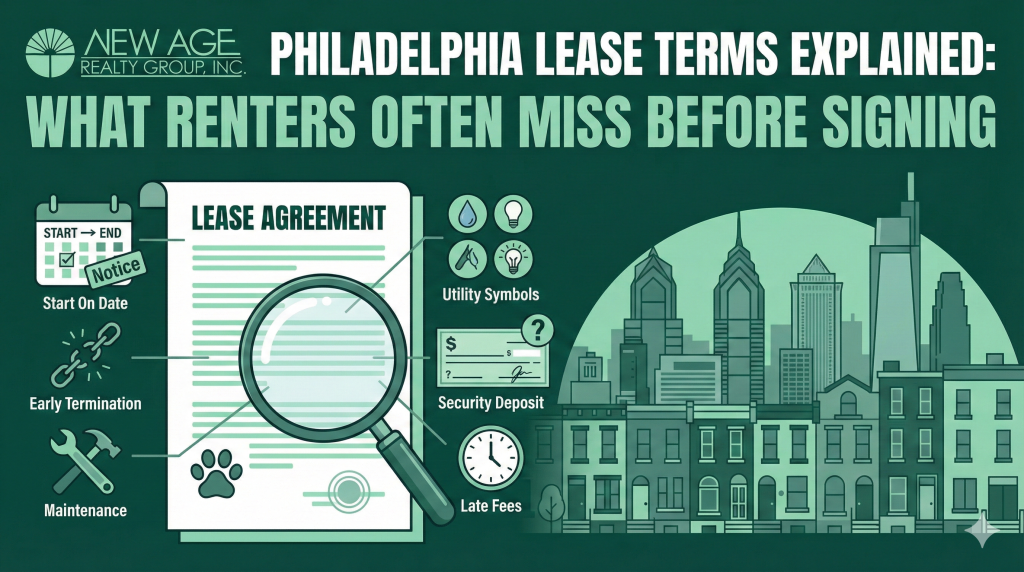
Leases are not exactly thrilling reading. Most renters skim. Some scroll quickly. A few promise themselves they will “come back to it later.” And almost everyone assumes the document is standard.
It usually is. Until it is not.
Understanding Philadelphia lease terms is less about legal jargon and more about avoiding small misunderstandings that turn into large frustrations. If you are reviewing a Philadelphia lease agreement or trying to clarify your tenant rights Philadelphia, slowing down now can save months of tension later.
Let’s walk through the parts renters often overlook.
The Lease Term Is Not Just a Start and End Date
It sounds obvious. A lease has a start date and an end date. But the structure matters.
Many Philadelphia lease terms automatically convert to month-to-month if no renewal is signed. Others require written notice 60 days before expiration. Some include automatic rent increases at renewal.
If you assume the lease simply “ends,” you may be surprised to find you are still responsible for rent until proper notice is given.
Before signing a Philadelphia lease agreement, confirm:
- How much notice is required before moving out
- Whether the lease auto-renews
- What happens if you leave early
It is not dramatic. It is just practical.
Early Termination Clauses Are Often Vague
Life changes. Jobs relocate. Relationships shift.
Some leases include early termination options. Others do not.
When renters ignore this section, they sometimes discover too late that breaking a lease requires:
- Paying two months’ rent
- Forfeiting a security deposit
- Covering rent until a replacement tenant is found
Knowing your tenant rights Philadelphia helps here, but rights are only part of the picture. The lease itself governs the agreement.
If you are still deciding whether to share housing or live alone, reviewing guidance about renting with a roommate in Philly can help you assess whether flexibility might matter more than you think.
Because breaking a lease with another person involved can complicate everything.
Maintenance Responsibilities Are Not Always One-Sided
Many renters assume all maintenance is the landlord’s responsibility. In reality, leases often divide responsibilities.
Landlords typically handle structural issues, plumbing, heating, and major repairs. But tenants may be responsible for:
- Replacing light bulbs
- Minor clogs
- Lawn care in single-family rentals
- Reporting issues promptly
Failure to report a leak early can sometimes make a tenant partially responsible for resulting damage. Reading this section carefully protects you. It also protects the property. On the landlord side of that equation, how quickly issues actually get resolved depends heavily on whether the owner has property maintenance handled by a professional management team with a vendor network and documented response process — or whether they’re handling calls themselves on a case-by-case basis.
And if you are still deciding between housing types, the practical differences discussed in choosing between renting a house or an apartment in Philadelphia become relevant here. Single-family homes often shift more routine upkeep to tenants than large apartment buildings do.
Security Deposits: Timing and Documentation Matter
Security deposits are straightforward in theory. You pay upfront. You receive it back if the property is returned in acceptable condition.
But Philadelphia lease terms often specify detailed timelines and documentation requirements.
Before signing your Philadelphia lease agreement, check:
- How much the security deposit is
- When it must be returned
- What qualifies as damage versus normal wear and tear
- Whether move-in inspections are documented in writing
Take photos at move-in. It may feel excessive. It is not. Clear documentation avoids unnecessary disputes later.
Utilities and Hidden Monthly Costs
Rent is only part of your monthly housing cost.
Some leases include water. Others do not. Trash removal may be included in multi-unit buildings but excluded in smaller properties.
The Philadelphia lease agreement should clearly state:
- Which utilities are tenant-paid
- How utilities are billed if shared
- Whether there are administrative fees
These details affect affordability more than many renters expect. Especially as energy prices fluctuate.
If you found the listing online and are unsure whether everything presented was legitimate, it is worth reviewing warning signs in discussions about Philadelphia rental scams and how to avoid them. Sometimes vague utility language signals a deeper issue.
Better to confirm now than question later.
Pet Policies Are Often Strictly Enforced
Pet clauses are rarely flexible once signed.
Leases may include:
- Breed restrictions
- Weight limits
- Monthly pet rent
- Non-refundable pet fees
Failing to disclose a pet can create lease violations.
Even emotional support animal provisions require proper documentation under fair housing guidelines.
This is another area where understanding your tenant rights Philadelphia is useful. Rights protect renters from discrimination, but they do not eliminate contractual obligations.
Clarity prevents conflict.
Occupancy Limits and Guest Policies
It feels harmless to let a friend stay for a few weeks. But leases often limit how long guests can remain before being considered unauthorized occupants.
If you are sharing a rental, this becomes especially important. Roommate dynamics change when unofficial long-term guests enter the picture.
Again, understanding Philadelphia lease terms means knowing how long a visitor can stay and what the consequences are if occupancy limits are exceeded.
Most issues start small. They escalate when communication breaks down.
Late Fees and Grace Periods

Many renters assume there is a built-in grace period for rent. Some leases provide one. Others do not. Late fees may begin the day after rent is due. Some increase incrementally after several days.
Before signing a Philadelphia lease agreement, verify:
- When rent is due
- When late fees begin
- How payments must be submitted
- Whether partial payments are accepted
It sounds administrative. It is. But it matters. Consistent communication and clear expectations keep relationships steady.
Renewal Terms and Rent Increases
Rent increases are not random. Leases typically define whether rent can increase at renewal and how notice will be delivered. Understanding this in advance helps you plan.
Philadelphia rent trends fluctuate by neighborhood, and some areas see more frequent increases than others. Knowing how your lease handles renewal terms allows you to anticipate changes instead of reacting to them.
Stability often depends on preparation.
Dispute Resolution Clauses
Few renters think about disputes at the start. Leases may specify mediation requirements or outline court jurisdictions. While rarely invoked, these clauses matter if disagreements escalate.
This is where reading the fine print truly pays off.
You may never need this section. That is ideal. But if you do, you will be glad you did not skim.
So What Do Renters Miss Most?
It is rarely one dramatic oversight.
It is small assumptions:
- Assuming notice is not required
- Assuming utilities are included
- Assuming guest stays are unlimited
- Assuming breaking a lease is simple
A Philadelphia lease agreement is a roadmap for your time in the property. Reading it carefully clarifies responsibilities on both sides.
Understanding Philadelphia lease terms does not require legal training. It requires attention.
And knowing your tenant rights Philadelphia ensures that you enter the agreement informed rather than uncertain.
Final Thoughts
Signing a lease should feel clear, not rushed.
Most rental experiences are smooth when expectations are aligned from the start. Problems usually arise when details were overlooked or misunderstood.
If you ever have questions about lease language, rental expectations, or housing options across the city, we are always open to walking through the details together. At New Age Realty Group, we believe informed renters make stronger, more stable communities.
Sometimes the smartest move is not finding the perfect apartment. It is fully understanding the agreement you are about to sign.
FAQs
1. What should I look for in a Philadelphia lease agreement?
A: Review lease length, early termination clauses, maintenance responsibilities, utility costs, and renewal terms carefully.
2. What are tenant rights in Philadelphia?
A: Tenant rights Philadelphia laws protect renters regarding deposits, discrimination, and habitability, but lease terms still govern many obligations.
3. Can I break my lease early in Philadelphia?
A: It depends on the lease. Some agreements include early termination options, while others require payment until a new tenant is found.
4. Are utilities usually included in Philadelphia rentals?
A: Not always. The lease should clearly state which utilities are tenant-paid and which are included.
5. Do leases automatically renew in Philadelphia?
A: Some convert to month-to-month automatically. Always verify notice requirements before the lease end date.